Skip to content
Entrex Entrex

01 — ProductionUzalishaji

Maize and sunflower, grown on rain alone

Mahindi na alizeti, yanalimwa kwa mvua tu

Our commercial production is rainfed. The figures below are the targets for the first season — a base case and an optimal case — together with the rotation and tillage system that should make them repeatable.

Uzalishaji wetu wa kibiashara unategemea mvua. Takwimu zilizo hapa chini ni malengo ya msimu wa kwanza — hali ya msingi na hali nzuri — pamoja na mzunguko na mfumo wa kulima unaopaswa kuyafanya yarudiwe.

02 — First-season targetsMalengo ya msimu wa kwanza

Planned harvest, rainfed only

Mavuno yaliyopangwa, kwa mvua tu

CropZao ScenarioHali BagsMagunia Bag weightUzito wa gunia TotalJumla
MaizeMahindi BaseMsingi 1 500 100 kg 150 000 kg
MaizeMahindi OptimalNzuri 2 000 100 kg 200 000 kg
SunflowerAlizeti BaseMsingi 500 70 kg 35 000 kg
SunflowerAlizeti OptimalNzuri 650 70 kg 45 500 kg

Targets for the first production season under rainfed conditions. Delivered in standard bags: 100 kg for maize grain, 70 kg for sunflower seed.

Malengo ya msimu wa kwanza wa uzalishaji kwa kilimo cha mvua. Yanatolewa kwa magunia ya kawaida: kilo 100 kwa nafaka ya mahindi, kilo 70 kwa mbegu za alizeti.

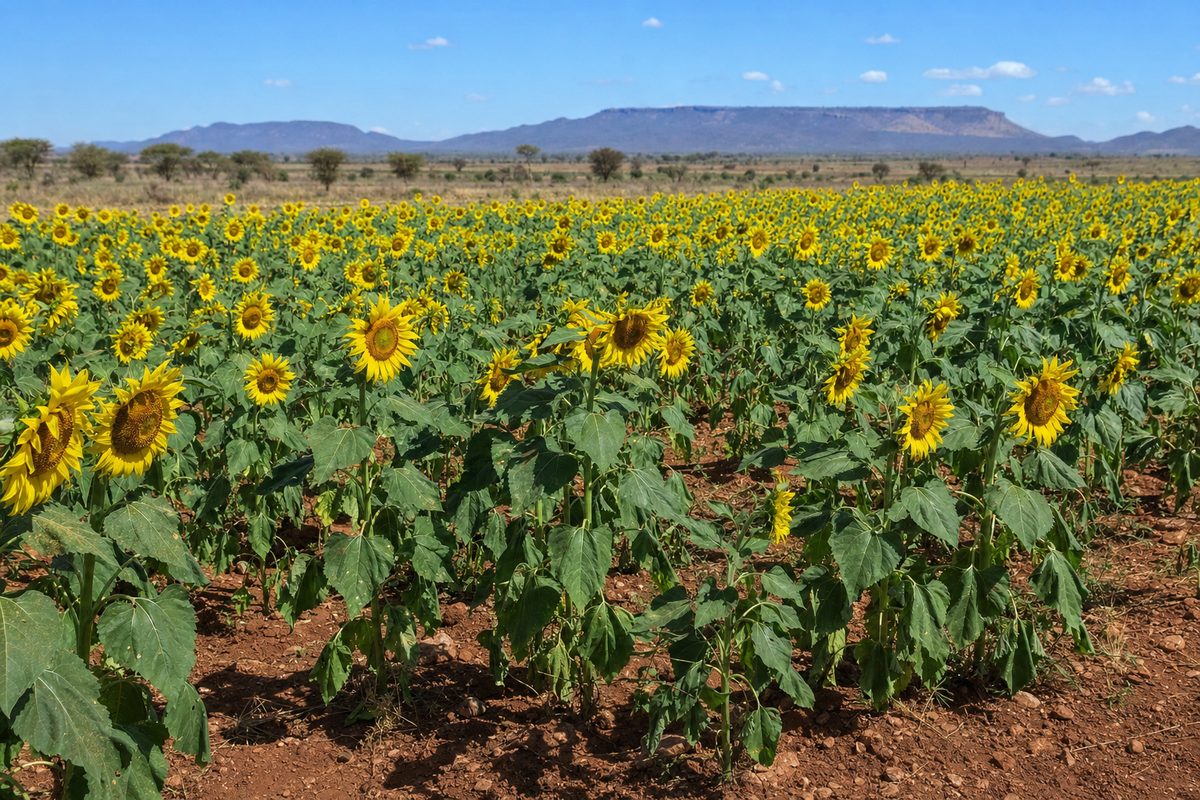
Sunflower field in full bloom under a clear sky in central Tanzania

03 — RotationMzunguko wa mazao

A four-year rotation, with all four crops in the ground every year

Mzunguko wa miaka minne, mazao yote manne shambani kila mwaka

The land is divided into four blocks of equal size. Each block follows the same sequence, one year apart — so in any given season the farm carries all four crops at once. That spreads weather, price and pest risk instead of betting the year on one crop.

Ardhi imegawanywa katika vitalu vinne vya ukubwa sawa. Kila kitalu hufuata mfuatano huo huo, kwa tofauti ya mwaka mmoja — hivyo kila msimu shamba lina mazao yote manne kwa wakati mmoja. Hii inasambaza hatari ya hali ya hewa, bei na wadudu badala ya kutegemea zao moja.

Sunflower

Alizeti

Deep taproot that opens the profile and reaches moisture the cereals cannot. An oil crop with a separate market from grain.

Mzizi mkuu wa kina unaofungua udongo na kufikia unyevu ambao nafaka hazifikii. Zao la mafuta lenye soko tofauti na nafaka.

Maize

Mahindi

The main commercial crop, sown into the structure and residue left by the sunflower year.

Zao kuu la kibiashara, hupandwa katika muundo na mabaki yaliyoachwa na mwaka wa alizeti.

Cowpea

Kunde

A legume that fixes nitrogen — an estimated 80–150 kg N/ha returned to the soil — while producing food and fodder.

Mmea wa mikunde unaofunga nitrojeni — takriban kilo 80–150 N kwa hekta kurudi kwenye udongo — pamoja na chakula na malisho.

Sorghum

Mtama

The key crop for Chemba conditions in year four: it cleans the field, needs no nitrogen application, and tolerates drought and pest pressure.

Zao muhimu kwa hali ya Chemba mwaka wa nne: linasafisha shamba, halihitaji mbolea ya nitrojeni, na linavumilia ukame na wadudu.

40–60%

Expected reduction in fungal disease pressure by breaking host cycles.

Upungufu unaotarajiwa wa magonjwa ya fangasi kwa kukatisha mzunguko wa vimelea.

+80–150 kg N/ha

Nitrogen returned to the soil by the cowpea year, reducing fertiliser dependence.

Nitrojeni inayorudi kwenye udongo kutoka mwaka wa kunde, ikipunguza utegemezi wa mbolea.

WEEDS

Lower weed pressure — different crops, sowing dates and canopies interrupt weed cycles.

Magugu machache — mazao tofauti, tarehe za kupanda na vifuniko vya majani vinakatisha mzunguko wa magugu.

MOISTURE

Better soil moisture retention through varied rooting depths and continuous residue cover.

Uhifadhi bora wa unyevu kwa mizizi ya kina tofauti na kifuniko cha mabaki kinachoendelea.

These are planning assumptions for our own site, derived from rotation literature and the agronomic judgement of our team — not measured results. They will be replaced by our own trial data as it is collected.

Hizi ni dhana za kupanga kwa eneo letu, zilizotokana na machapisho ya mzunguko wa mazao na maoni ya kitaalamu ya timu yetu — sio matokeo yaliyopimwa. Zitabadilishwa na takwimu zetu za majaribio zitakapopatikana.

04 — Tillage technologyTeknolojia ya kulima

Two stages, from minimal tillage to strip-till

Hatua mbili, kutoka kulima kidogo hadi strip-till

STAGE I · 2026–2028

Minimal tillage

Kulima kidogo

  • DLB 12 ripper to break the plough pan and open the profile for deeper rooting.Riper DLB 12 kuvunja tabaka gumu na kufungua udongo ili mizizi iende kina.
  • Disc ploughing and harrowing where field condition requires it.Kulima kwa disc na kuhandika pale hali ya shamba inahitaji.
  • Sowing without full inversion wherever the field allows — saving fuel and conserving moisture.Kupanda bila kupindua udongo wote pale inapowezekana — kuokoa mafuta na kuhifadhi unyevu.
STAGE II · FROM 2028

Strip-till

Strip-till (kulima kwa mistari)

  • For maize and sunflower: only a 25–30 cm band is worked, directly under the seed row.Kwa mahindi na alizeti: unalimwa upana wa sentimita 25–30 tu, chini ya mstari wa mbegu.
  • Target fuel saving of 30–50% compared with full ploughing.Lengo la kuokoa mafuta kwa asilimia 30–50 kulinganisha na kulima kwa jembe kamili.
  • Target improvement in rainfall retention of 15–25% more moisture in the root zone.Lengo la kuboresha uhifadhi wa mvua kwa unyevu zaidi wa asilimia 15–25 katika eneo la mizizi.
  • Undisturbed, residue-covered soil between the rows to hold the surface against wind.Udongo kati ya mistari haugusiwi na unabaki na mabaki ili kuzuia upepo.
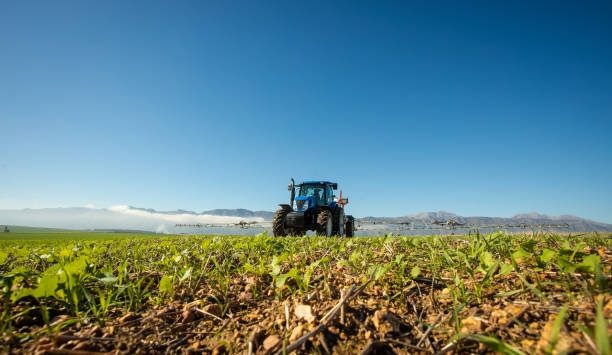
Tractor working a field with crop residue on the surface
Stage I machinery is specified around ripping and shallow work, so it remains useful after the move to strip-till.
Mitambo ya Hatua I inachaguliwa kwa kuvunja tabaka gumu na kazi za juu, hivyo itaendelea kufaa baada ya kuhamia strip-till.

Fuel and moisture figures are Entrex planning targets for our own conditions, to be verified on our trial plots.

Takwimu za mafuta na unyevu ni malengo ya Entrex kwa hali yetu, yatakayothibitishwa kwenye politi zetu za majaribio.

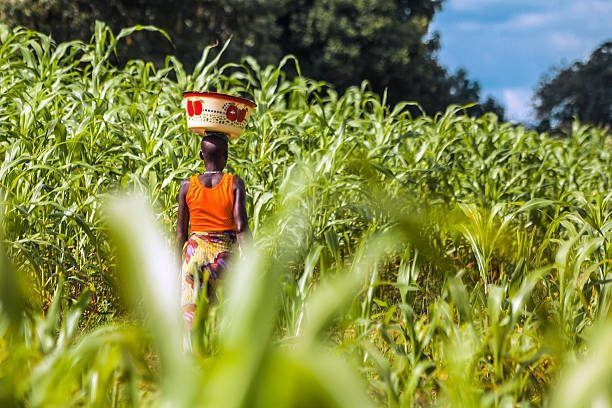
A farmer standing in a tall maize field

05 — Technical cooperationUshirikiano wa kiufundi

Planned cooperation with Claydon

Ushirikiano uliopangwa na Claydon

For the strip-till stage we intend to work with Claydon, a British manufacturer whose Opti-Till® system establishes crops in worked bands with minimal soil disturbance. The company has farmed heavy clay in Suffolk since the early 1900s and develops its machines on its own working farm.

Kwa hatua ya strip-till tunakusudia kushirikiana na Claydon, mtengenezaji wa Uingereza ambaye mfumo wake wa Opti-Till® hupanda mazao katika mistari iliyolimwa kwa kusumbua udongo kidogo. Kampuni hiyo imelima udongo mzito wa Suffolk kuanzia mwanzoni wa miaka ya 1900 na hutengeneza mitambo yake kwenye shamba lake lenyewe.

Claydon states that the Opti-Till® approach maximises yield potential, improves soil health and aeration with minimal soil disturbance, and reduces costs — the same three objectives that define our own tillage plan.

Claydon inaeleza kuwa mbinu ya Opti-Till® huongeza uwezo wa mavuno, huboresha afya ya udongo na mzunguko wa hewa kwa kusumbua udongo kidogo, na hupunguza gharama — malengo matatu yale yale yanayoongoza mpango wetu wa kulima.

claydondrill.com

06 — For buyersKwa wanunuzi

Buying maize or sunflower from Changamka

Kununua mahindi au alizeti kutoka Changamka

Products
Mazao
Maize grain and sunflower seed; cowpea and sorghum from the rotation blocks.Nafaka ya mahindi na mbegu za alizeti; kunde na mtama kutoka vitalu vya mzunguko.
Packing
Ufungashaji
Standard bags — 100 kg maize, 70 kg sunflower.Magunia ya kawaida — kilo 100 mahindi, kilo 70 alizeti.
Season
Msimu
One harvest per year, following the November/December–April/May rains.Mavuno mara moja kwa mwaka, baada ya mvua za Novemba/Desemba–Aprili/Mei.
Offtake
Mikataba ya kununua
We welcome discussions on forward contracts and multi-season offtake agreements.Tunakaribisha mazungumzo ya mikataba ya mbele na mikataba ya misimu kadhaa.