Skip to content
Entrex Entrex

01 — The siteEneo

Changamka Farm, Chemba District

Shamba la Changamka, Wilaya ya Chemba

A semi-arid site on the central Tanzanian plateau: one rainy season, sandy shale-derived soils, mbuga clays in the low ground, and a deep aquifer beneath. Everything we plan starts from these facts.

Eneo kame katika uwanda wa kati wa Tanzania: msimu mmoja wa mvua, udongo wa kichanga unaotokana na shale, udongo wa mbuga sehemu za chini, na chemchemi ya maji ya kina chini. Kila mpango wetu unaanzia hapa.

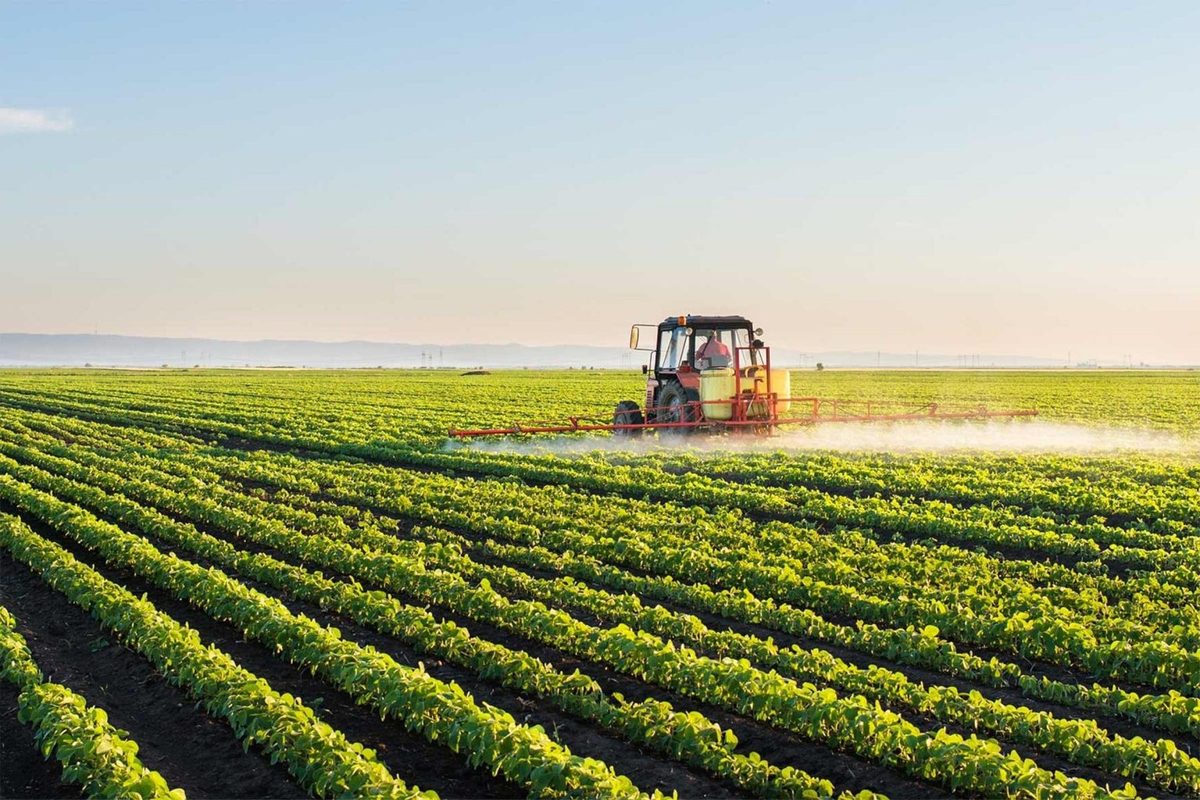
Long crop rows running to the horizon under an open sky

Location

Mahali

Changamka Village lies in Msaada Ward, Chemba District, in the north of Dodoma Region — roughly 60 km east of the Chemba district headquarters.

Kijiji cha Changamka kipo katika Kata ya Msaada, Wilaya ya Chemba, kaskazini ya Mkoa wa Dodoma — kama kilomita 60 mashariki ya makao makuu ya wilaya ya Chemba.

Village / ward
Kijiji / kata
Changamka Village, Msaada Ward
District / region
Wilaya / mkoa
Chemba District, Dodoma Region
Coordinates
Viwianishi
5°23'17"S · 36°17'47.5"E
Altitude
Mwinuko
approx. 1,350–1,400 m above sea leveltakriban mita 1,350–1,400 juu ya usawa wa bahari
Access
Ufikaji
approx. 60 km east of Chemba district headquarterstakriban kilomita 60 mashariki ya makao makuu ya wilaya ya Chemba

Open the location in Google Maps →Fungua eneo katika Google Maps →

Map data © OpenStreetMap contributors.

Taarifa za ramani © wachangiaji wa OpenStreetMap.

02 — ClimateHali ya hewa

One rainy season, and it decides the year

Msimu mmoja wa mvua, na huamua mwaka wote

RAIN

Unimodal rainfall

Mvua ya msimu mmoja

Chemba District is mostly semi-arid, with low and erratic rain falling in a single season between November/December and April/May, often as heavy storms. Dodoma Region totals typically fall in the 500–800 mm range.

Wilaya ya Chemba ni kame kwa kiasi kikubwa, mvua ni ndogo na haitabiriki, hunyesha msimu mmoja kati ya Novemba/Desemba na Aprili/Mei, mara nyingi kwa dhoruba kubwa. Mkoa wa Dodoma hupata kama milimita 500–800.

WIND

Dry-season wind erosion

Mmomonyoko wa upepo kiangazi

Bare soil is vulnerable to wind erosion once the rains stop. Keeping crop residue and a living or dead mulch on the surface is the single most important protective measure on this site.

Udongo ulio wazi huathirika na upepo mara mvua zinapoisha. Kuweka mabaki ya mazao na matandazo juu ya udongo ni kinga muhimu kuliko kingine chochote katika eneo hili.

WATER

Every millimetre counts

Kila milimita ni muhimu

Because production is rainfed, the agronomy is built around water capture and retention: reduced tillage, breaking the plough pan so roots reach deeper moisture, residue cover, and crops that tolerate drought late in the season.

Kwa kuwa uzalishaji unategemea mvua, agronomia yetu inajengwa kwa kukamata na kuhifadhi maji: kulima kidogo, kuvunja tabaka gumu ili mizizi ifikie unyevu wa chini, kifuniko cha mabaki, na mazao yanayovumilia ukame mwishoni wa msimu.

03 — Geology & soilsJiolojia na udongo

What lies under the field

Kilichopo chini ya shamba

The site sits on a Cenozoic sequence — shales, quartzites, gneisses and granitic rocks. The surface layer is a grey, sandy, shale-derived soil, interfingered with the heavier mbuga clays typical of the low-lying depressions of central Tanzania.

Eneo lipo juu ya mfumo wa Cenozoic — shale, quartzite, gneiss na mawe ya granite. Tabaka la juu ni udongo wa kijivu, wa kichanga, unaotokana na shale, uliochanganyika na udongo mzito wa mbuga unaopatikana katika mabonde ya Tanzania ya kati.

This combination is workable but demanding. The sandy fraction drains and heats quickly and is prone to blowing when bare; the mbuga clays hold water well but seal and crack, and must be worked at the right moisture. Both argue for less inversion, more cover, and deeper rooting.

Mchanganyiko huu unalimika lakini unahitaji uangalifu. Sehemu ya kichanga hupitisha maji na kupata joto haraka na hupeperushwa na upepo ikiwa wazi; udongo wa mbuga huhifadhi maji vizuri lakini hujifunga na kupasuka, na unapaswa kulimwa kwa unyevu unaofaa. Vyote vinashauri kupindua udongo kidogo, kifuniko zaidi, na mizizi ya kina.


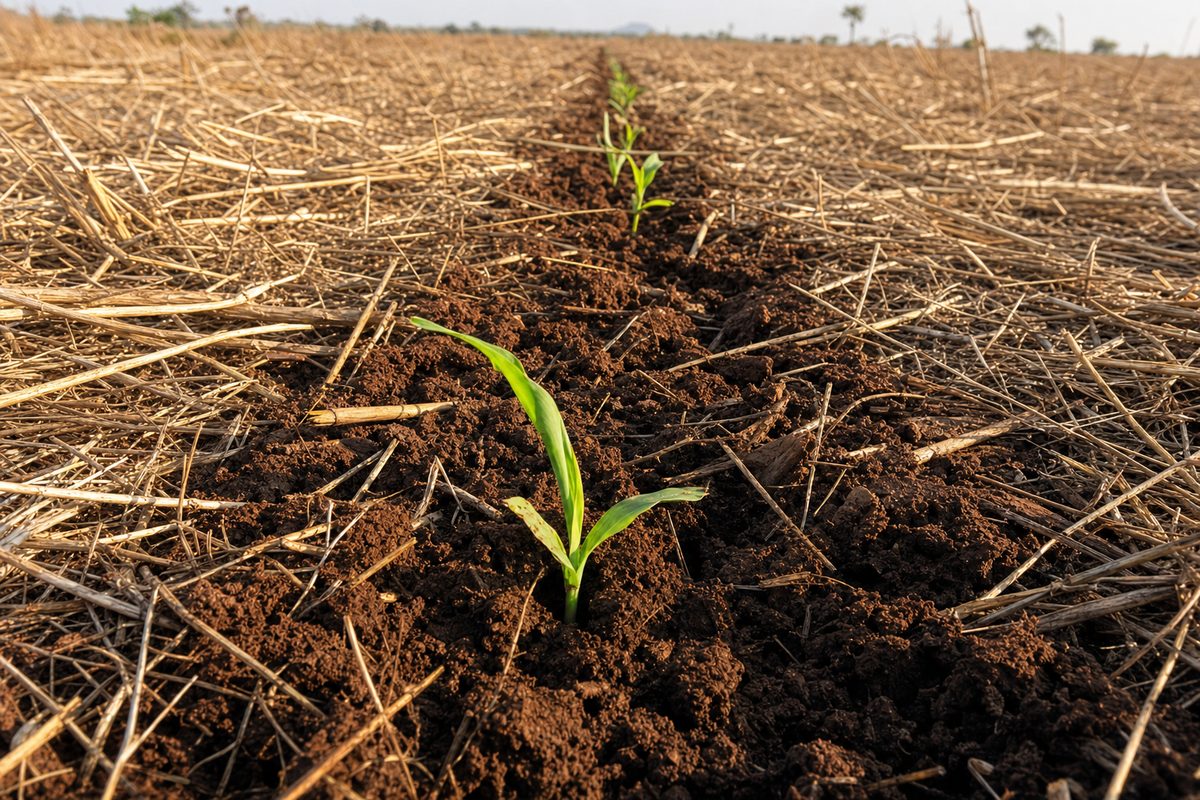
A narrow tilled soil strip with crop residue mulch on both sides and emerging seedlings
Strip tillage: a worked band under the seed row, undisturbed residue-covered soil between rows.
Kulima kwa mistari: upande uliolimwa chini ya mstari wa mbegu, na udongo wenye mabaki bila kuguswa kati ya mistari.

04 — WaterMaji

Groundwater and the long-term irrigation question

Maji ya ardhini na swali la umwagiliaji wa muda mrefu

Geophysical work in the wider area indicates a main aquifer at about 180 m depth (reference sounding VES-02, Dakawa Irrigation). For the company this is a long-term option, not a first-season assumption: all yield figures we publish are for rainfed production only.

Kazi za kijiofizikia katika eneo pana zinaonyesha chemchemi kuu ya maji katika kina cha kama mita 180 (upimaji wa rejea VES-02, Dakawa Irrigation). Kwa kampuni hii ni fursa ya muda mrefu, sio dhana ya msimu wa kwanza: takwimu zote za mavuno tunazotoa ni za kilimo cha mvua tu.

Short term — capture what falls

Muda mfupi — kamata mvua inayonyesha

Reduced tillage, ripping the compacted layer, residue cover and timely sowing so that the crop uses the rain it gets. Water security in the first seasons comes from soil, not from pumps.

Kulima kidogo, kuvunja tabaka gumu, kifuniko cha mabaki na kupanda kwa wakati ili zao litumie mvua inayopatikana. Uhakika wa maji misimu ya kwanza unatoka kwenye udongo, sio pampu.

Long term — assess, then invest

Muda mrefu — pima, kisha wekeza

Borehole siting, yield testing and water quality analysis before any irrigation investment. With a shareholder whose career was built in water pipeline engineering, we intend to do this properly or not at all.

Kuchagua eneo la kisima, kupima uwezo wake na ubora wa maji kabla ya uwekezaji wa umwagiliaji. Tukiwa na mwanahisa aliyefanya kazi ya uhandisi wa mabomba ya maji, tunakusudia kufanya hili kwa usahihi au tusifanye kabisa.

Next: what we grow and how

Ifuatayo: tunalima nini na vipi

First-season yield targets, the four-year rotation, and the move from minimal tillage to strip-till.

Malengo ya mavuno msimu wa kwanza, mzunguko wa miaka minne, na mabadiliko kutoka kulima kidogo hadi strip-till.